
Our Dee Estuary Clean Water Initiative
The Clean Water initiative is a series of projects run by the Our Dee Estuary team and their partners to try and improve water quality within the Tidal Dee Catchment.
The Tidal Dee Catchment includes all the fresh water that flows into the Dee Estuary as well as the estuary itself.
You can learn more about the two Dee Catchment Partnerships by visiting the River Dee Catchment Partnership website.
Water-Friendly Business Scheme

This scheme was inspired by the Love my Beach project from Keep Britain Tidy and was a way for local businesses to learn more about their local water environment and what simple changes they can make to reduce the negative impact their business may be having on the Dee Estuary.
Once a business completed the checklist and made positive changes they received a certificate valid for 12 months as well as a window sticker for their premises. They received free advertising from the Our Dee Estuary project via our social media channels, our newsletter, and this website.
If you are a business owner and would like to know what changes you can make to your business to reduce your impact on the water environment you can view the checklists below.
Please note the contact details are no longer active. If you’d like to get in touch use the Contact Us form on this website.
Downloads
Our Dee Estuary Water-Friendly Business Checklist
Our Dee Estuary Water-Friendly Business Checklist for Caravan Parks
Love My Estuary Leaflet
Drain Misconnections and Your Household Plumbing
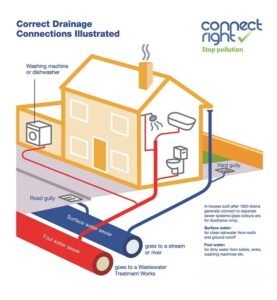
What are drain misconnections and why do they matter?
Drain misconnections happen when household appliances like washing machines, dishwashers, or even sinks are accidentally connected to the wrong drain. Instead of sending wastewater to the sewer for proper treatment, it flows straight into rivers, streams, or the sea, polluting the environment. Many people don’t realize this can happen in their homes, but fixing it is often simple and makes a big difference in protecting local wildlife and keeping our waterways clean.
What should you do if you suspect you have misconnected drains?
If you think your drains might be misconnected, don’t worry—there’s help available. Start by checking where your appliances and sinks drain to or ask a plumber to inspect your pipework. Many local water companies or councils also offer advice and can point you in the right direction. If a misconnection is found, a qualified plumber can usually fix it with a straightforward repair. Acting quickly not only protects the environment but can also save you from bigger problems in the future.
Here are some useful links to find out more about drain misconnections and what you can do to prevent or repair them.
Water UK – The trade association for the water industry
They work with companies to help ensure that customers receive high quality tap water at a reasonable price and that our environment is protected and improved
WaterSafe – WaterSafe is a free online directory and national accreditation body for competent and qualified plumbers, water supply pipe installers and other water services specialists in England, Scotland, Wales and Northern Ireland.
What else can I do?
Here are some simple steps to take to protect your household plumbing from costly blockages and damage and reduce your impact on the local water environment.
Only Flush the Three P’sTo keep your drains clear and avoid blockages, remember to only flush the three P’s: paper, pee, and poo. Wet wipes, sanitary products, cotton pads, and other items don’t break down properly and can cause serious blockages in pipes and sewers. Even products labelled “flushable” can still create problems. Always put anything other than the three P’s in the bin instead.


ConnectRight Checklist
To help protect your local environment, make sure your home is connected correctly—check that your drains are linked to the right sewer and fix any problems. Remember, only rain should go down the drain! Chemicals, paints, cooking oils, and motor oils should always be taken to your local household waste site.
Avoid blocking drains by disposing of fats, oils, and grease in the bin, not the sink. Household items like nappies, cotton buds, wet wipes, razors, tampons, and syringes should also be bagged and binned, as they can block drains and cause sewer overflows. If you spot water pollution, don’t ignore it—report it to the Environment Agency’s incident hotline on 0800 80 70 60 if you live in England and the Natural Resources Wales incident hotline 0300 065 3000 if you live in Wales. Both are open 24 hours a day.
By taking these simple steps, you can help keep your local rivers and beaches clean and healthy.


