
Highlights of National Marine Week
Earlier this month Our Dee Estuary celebrated National Marine Week so in our August newsletter we wanted to share our highlights from our jampacked social media campaign. We hope you enjoy it!
If you follow us on social media and think you will have seen it all already please keep reading as we have some very special events in this newsletter!
The Our Dee Estuary Team

What Is National Marine Week?
It is a two week long celebration of all things marine by The Wildlife Trusts. Why is it two weeks long? Because of the difference in tide times around the UK coastline. By having two weeks it means that all 46 wildlife trusts get the chance to celebrate a full week of events. Many landlocked trusts still celebrate National Marine Week because, as we all know, what happens on the land has a huge impact on our rivers and our seas.
Our Dee Estuary is proud to have two wildlife trusts as core partners in our project, North Wales Wildlife Trust and our hosts Cheshire Wildlife Trust. We are also a key participant in the Living Seas North West partnership which includes Cumbria, Lancashire and Cheshire Wildlife Trusts all working together to protect our patch of the beautiful North Sea and it’s coastline.

SHORESEARCH – BOX CORE SURVEY
The coastline is our most visible and accessible link with the ocean so studying it is really important.
During Shoresearch surveys we do box core samples in which we sieve intertidal mud to find out what is living below the surface. This is important because this hidden life is the reason the estuary is the destination of choice for over 120,000 of visiting birds in winter.
Some of the creatures we might find in a box core sample are shellfish, crustaceans, worms and amphipods.
We will soon be announcing details of our upcoming Shoresearch events via our newsletter, on our webpage and via social media so please do follow us on Facebook, Instagram and Twitter if you can.
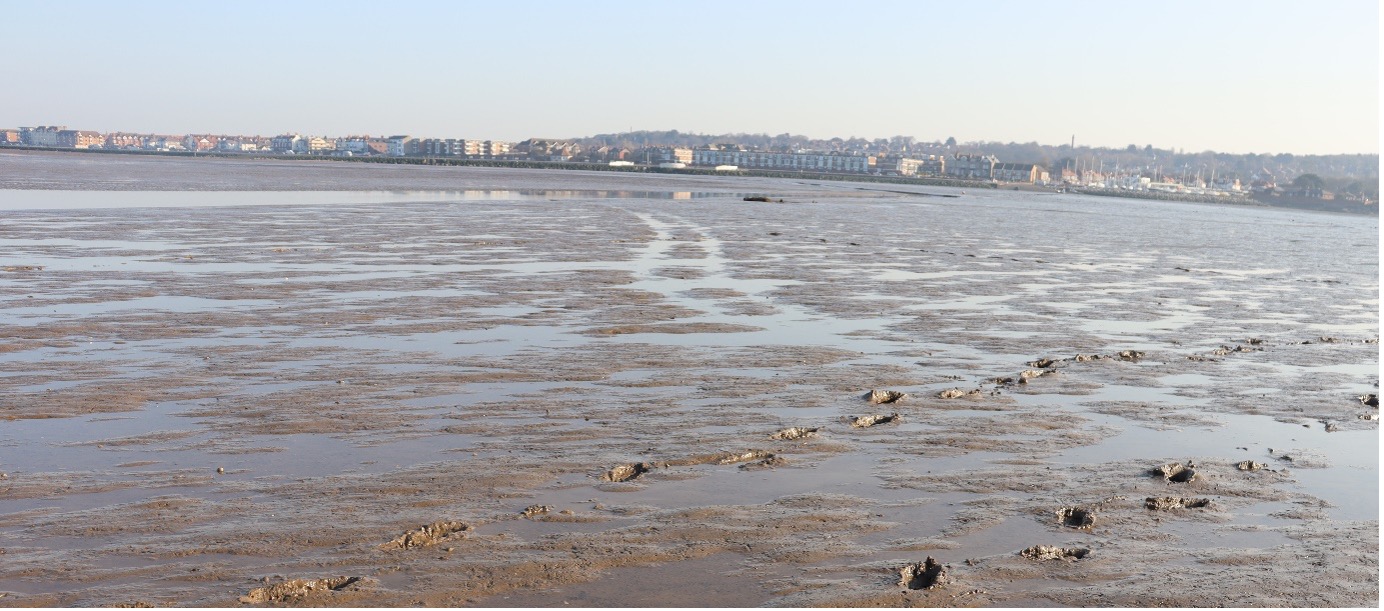
MUDFLATS – THE HIDDEN POWERHOUSE
You might describe mudflats as brown, baron and uninteresting but you couldn’t be further from the truth.
Did you know that the mudflats of the Dee Estuary have the same calorific content per cubic meter as 16 Mars bars!
Estuaries are ranked alongside tropical rainforests and coral reefs as some of the world’s most productive ecosystems and this is mainly due to the mudflats and the life they hold.
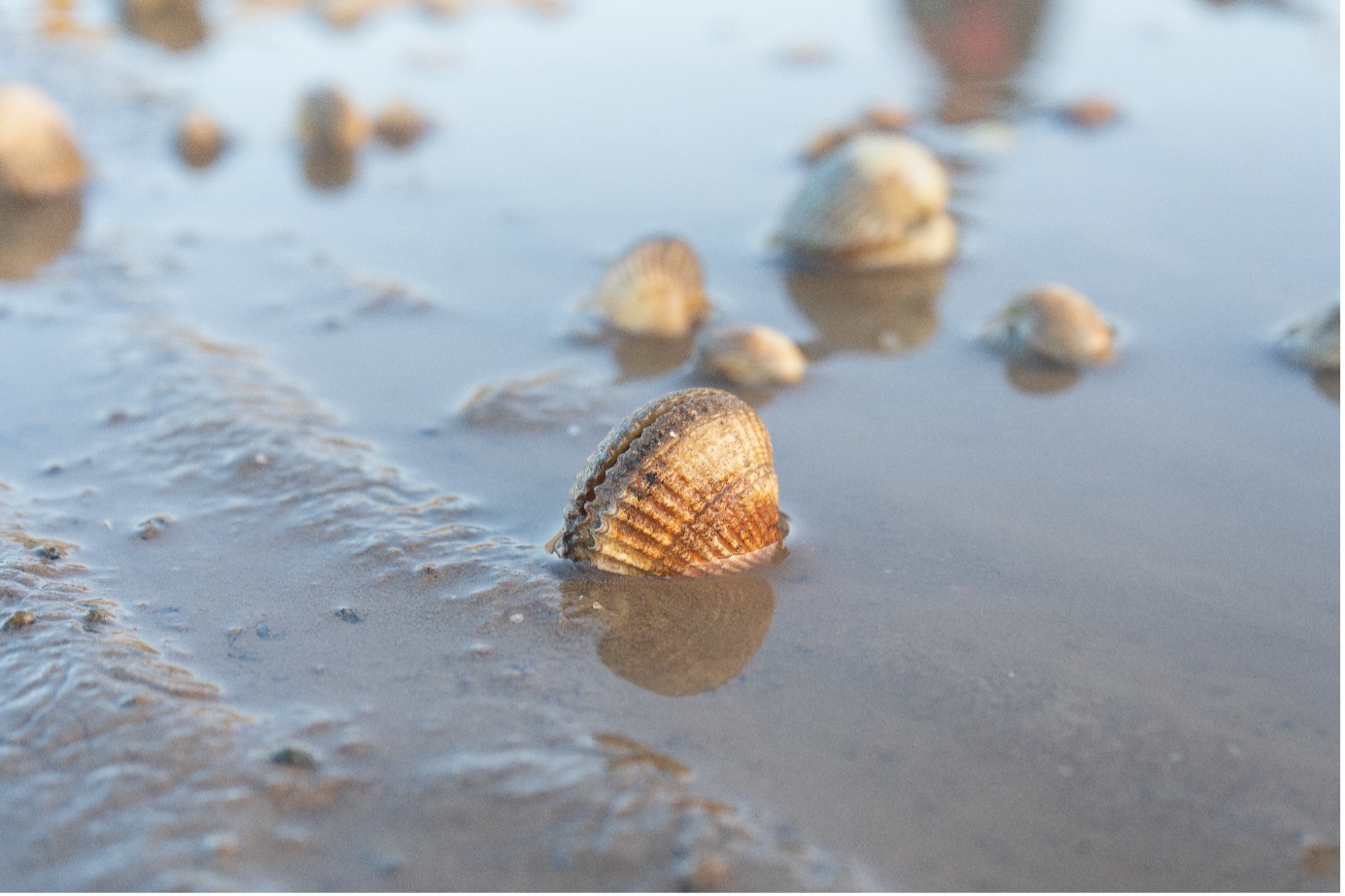
COCKLES – THE GEM OF THE MUDFLATS
A resident of the mudflats is the common cockle.
They are a vital industry on the estuary. Cockle fishing or cockling has been taking place on the Dee Estuary for hundreds of years.
They are also a key food source for birds and other sea creatures but don’t worry as the fisherman leave behind plenty of cockles for the wildlife to eat.
The cockle fishery is managed by our partners Natural Resources Wales Marine Team and they survey the cockle beds twice a year to estimate the number of cockles that can be fished from the estuary.
They calculate this using a bird food model which prioritises the wildlife at the same time as allocating a catch to the fisherman.
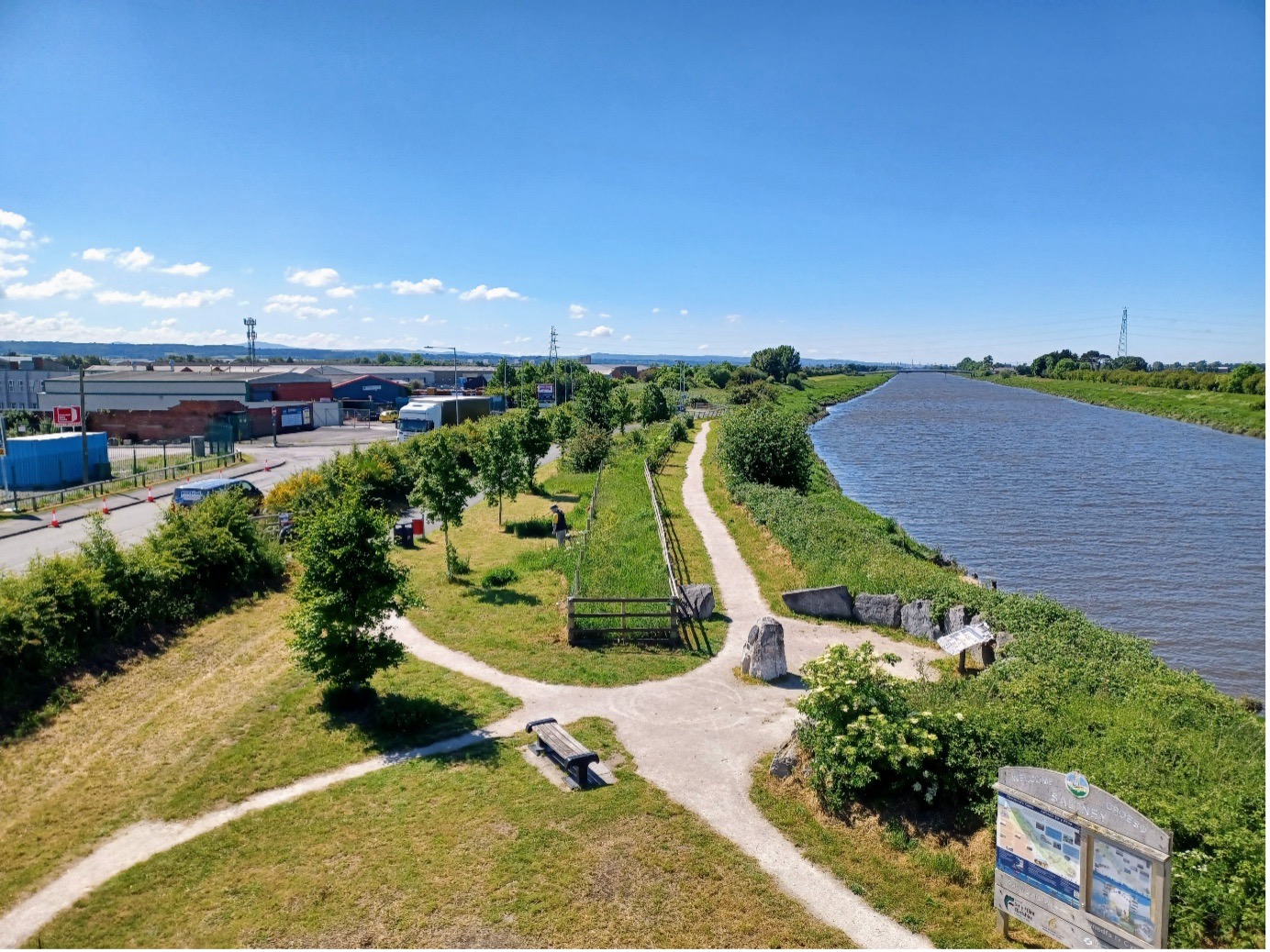
HISTORY AND NATURAL HERITAGE OF THE DEE ESTUARY
Emily, our Communications and Campaigns Officer, is getting more and more interesting information coming in from her History and Natural Heritage volunteers.
Check out some of the highlights below. We will also be sharing content on social media so follow us for more history and heritage!
Fisheries on the Dee
As long has human beings have lived along the banks of the River Dee, they have fished it.
As with all rivers of a significant size there is a history of boats casting nets or carrying anglers with rods as well as people fishing from the bank.
On the Dee it was also possible to establish fisheries where salmon in particular could be extracted by nets stretched under the spans of the Old Dee Bridge.
This was a practice that started in the 1100s and records show that for over 500 years it proved to be a financially lucrative activity with rights and licenses changing hand for considerable sums.
Chester’s Leather Industry
It will surprise many people to find that the primary industry in medieval Chester was leather.
As well as a large number of tanneries there were also many leather workers making saddles, shoes, and gloves.
Some skins would be obtained from local farms but the majority were shipped in up the Dee Estuary from Ireland.
The skins used varied from the more expected cattle and sheep hides through to martens, foxes and even badgers and otters.
The finished products were transported back along the estuary to London and to Continental Europe.
Photo Credits: RSWT, Charley Dutton, Emily Lake, Rachel Bradshaw, Tom McGovern, Paul Steele – Bald Hiker


