
March 2024

The final year of Our Dee Estuary
In this edition of the newsletter our project manager, Hannah, reflects on the past two and a half years of the Our Dee Estuary project and what the final year of delivering this work will look like.
We also have some reflections of our Shoresearch activities from February and some spotlights on species we found.
Our history and heritage feature has returned along with some upcoming events we want to tell you about.
We hope you enjoy this month’s newsletter,
The Our Dee Estuary Team

Our Dee Estuary – Reflections with one year to go!
How time flies! The Our Dee Estuary project has now been delivering its jam-packed programme of events, volunteering, nature recovery and general Dee Estuary celebration for over two years. We wanted to take a moment to reflect on some of our favourite moments and consider the important lessons that we have learnt during this time.
Our wellbeing with nature sessions were a highlight for the team. Working with groups from Journeymen and KimInspire we took part in a range of activities from practical conservation to water quality monitoring and artistic mosaic creation.
Our volunteers have continued to support us in many ways including monitoring of butterfly populations and collection of sound recordings and photographs showcasing the diverse habitats, wildlife, and humans of the estuary.
We have been installing fixed interpretation signage to help everyone to learn about the fascinating natural and human heritage of this special place. Thanks to the team and partners also for running a superb programme of events, including geology and archaeology walks and Shoresearch activities. These have helped us to reach a whole range of people and inspire them to care for their coastline.
We have come across many challenges in this time. Working across a large area and a country border was never going to be easy. We are so lucky to have such a supportive group of project partners to guide us, opening new channels of communication and willingness to collaborate with each other.
This small team have an awful lot to achieve along with a large amount of ambition. At times it has been hard to keep everything going. But we have adapted, found new ways to work with partners and focus on the work that can be most impactful. We want to thank all of our volunteers, partners and followers for feeding back and helping us to make sure we place our energy and time where it is most needed.
Through this project we have been struck by the level of knowledge and dedication that so many of you have for the estuary, its wild places, history, and species. We have been able to learn as much from you as we have been able to teach. This is really what it’s all been about, sharing and inspiring one another to love our estuary.

Shoresearch at Thurstaston
During the February half term on the English side of the Dee Estuary we held another successful Shoresearch event. Despite the persistent rain, grey skies and bitterly cold wind we had a strong turn out from new and familiar faces with a total of 23 people braving the weather.
The event was held at Thurstaston beach and staff from Wirral Rangers and rECOrd also attended; providing expertise in identifying what we found on the shoreline. The kids loved getting involved in scavenging for shells, shark egg cases and sea weeds that had washed up on the beach. Some of our favourites were small spotted catshark egg cases, common whelk egg balls and bladder wrack (a type of seaweed!).
We will be organising more Shoresearch events with the arrival of the warmer weather so keep a look out for these events online and in our newsletter.

Shoresearch species spotlight
During our two Shoresearch events in February we made some fascinating discoveries at both Talacre and Thurstaston beaches so we thought we would tell you a little more about some of the species we found.
We found small spotted cat shark eggs cases also known as ‘mermaids purses’. Another common sight was whelk egg balls but we also found some adult whelk shells too! As you can image we also found lots of varieties of seaweed, bladder wrack being just one of them.

Small spotted cat shark
Small-spotted catsharks were called lesser-spotted dogfish – which might be what you know them best as. It’s the same shark, just a different name!
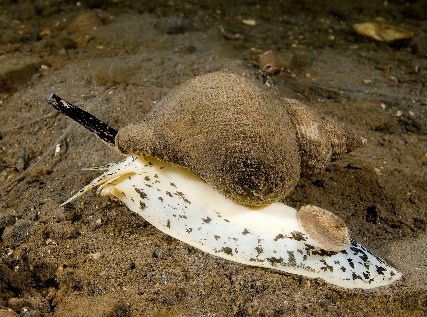
Common whelk
The common whelk is the largest sea snail found in UK seas, though you’re more likely to find the dry balls of empty whelk egg capsules washed up in strandlines.
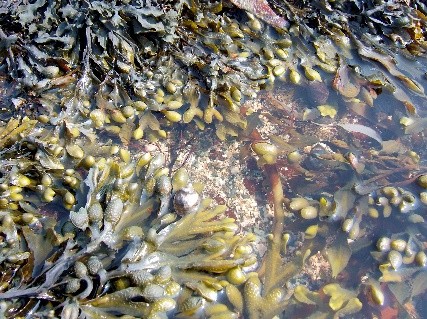
Bladder Wrack
This brown seaweed lives in the mid shore and looks a bit like bubble wrap with the distinctive air bladders that give it its name.

History and Natural Heritage of the Dee Estuary
Emily, our Communications and Campaigns Officer, is getting more and more interesting information coming in from her History and Natural Heritage volunteers.
Check out some of the highlights below. We will also be sharing content on social media so follow us for more history and heritage!

Flint Town
Flint town was constructed in the late 13th century in a grid pattern, some of which still exists today.
Whereas its castle was fortified with walls and a ‘double moat’, the town’s only form of defence was a ditch which surrounded it.
Flint’s historic grid pattern and moat were visible in John Speed’s map of Flintshire, dating from the 1600s.
The map can be viewed online via The People’s Collection of Wales
Hilbre Island Telegraph Station
In 1826, a line of semaphore telegraph stations was created between Liverpool to Holyhead, with the purpose of signalling ships via optical semaphore (using masts with moveable arms to transmit incoming ship numbers visually between stations).
For more information about the history of the Liverpool – Holyhead Semaphore Telegraph, the article
Liverpool – Holyhead Semaphore Telegraph by Bill Glover gives a comprehensive history.

Photo Credits: Robin Rowe, Our Dee Estuary, Mark Thomas (Wildnet), Paul Naylor (Wildnet), Alan Price (Wildlnet), Bald Hiker – Paul Steele, Ron Thomas.


