
August 2024 News
National Marine Week 2024 ‘Sea the Connection’
National Marine Week (NMW) is a Wildlife Trust initiative where all trusts, including those that are landlocked, can celebrate all things marine. It lasts for a fortnight so that all coastal trusts across the UK can celebrate with activities on the coast and navigate tide times safely.
This year we launched NMW with a celebration of the Irish Sea Network with Irish Sea Day. The Irish Sea Network is a group of more than 11 environmental non-government organisations from 6 different countries that all have a coastline on the Irish Sea. We invited people to add their wish for the Irish Sea on a Wish Fish. You can still submit your digital wish fish on the Living Seas North West website.
Here on the Dee Estuary we held 3 simultaneous events at Chester, Flint and Talacre as we wanted to highlight important locations on the Welsh side of the estuary. In Chester we talked about the water and wildlife of the Dee Estuary and what you as residents who live around the estuary can do to reduce your impact on the local water environment.


At Flint Castle we focused on the heritage and natural history of the estuary and surrounding areas with Wirral Archaeology, Flintshire Historical Society, Deeside and District Historical Society and the Flintshire Coastal Rangers. Finally, in Talacre we wanted to show we care for the estuary in an active way with a beach clean.
More recently we have helped to organise a beginner yoga class at Wirral Country Park in Thurstaston as part of the ‘Sea the Connection’ theme of this years NMW.
This sold out event was a huge success and we will be holding more yoga events on both the English and Welsh sides of the estuary throughout August and into September so keep an eye out in the newsletter and on our social media channels for more events coming soon.
Dog Pit stops
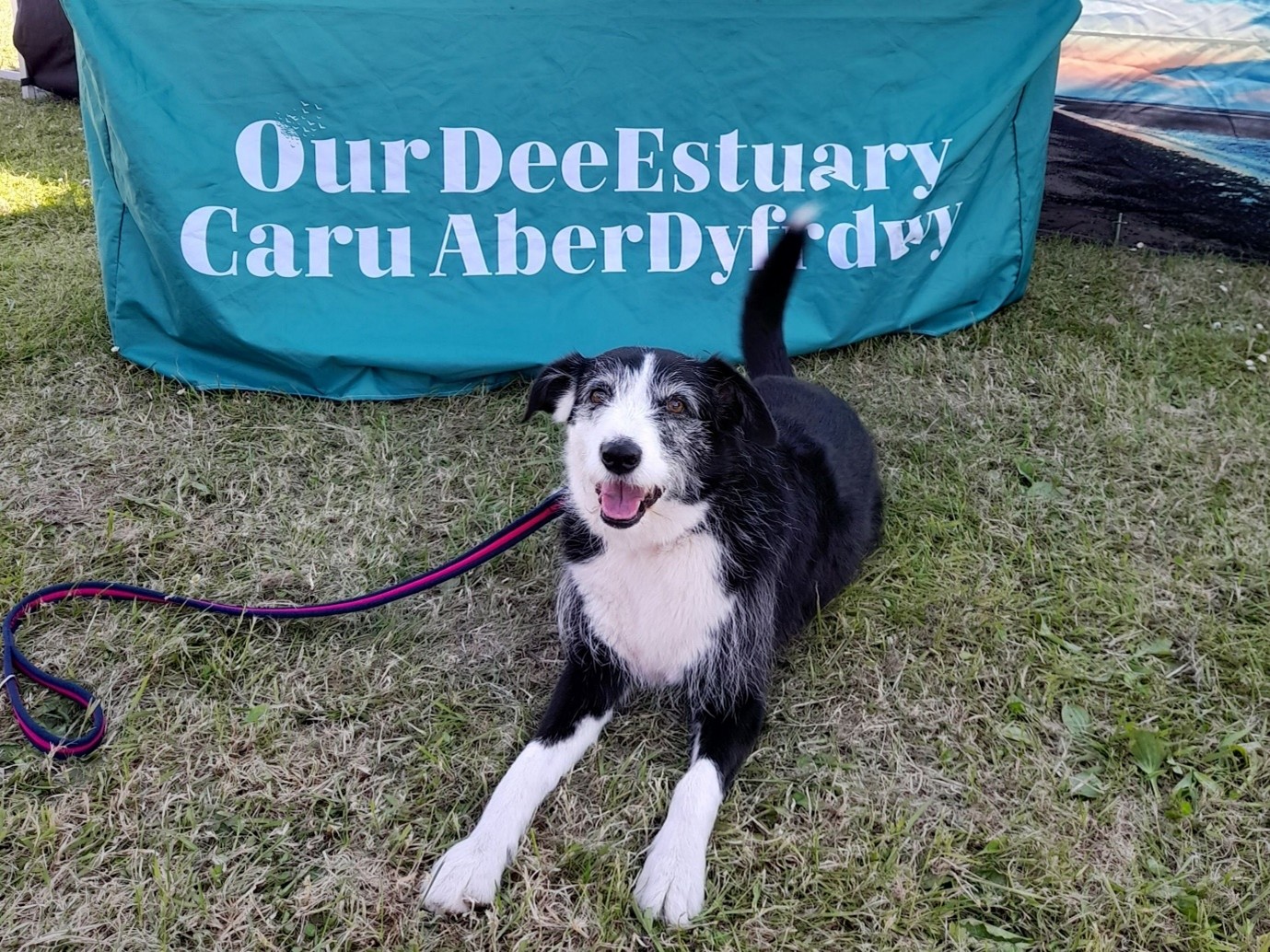
You might have seen our gazebo at Talacre or West Kirby recently and laden with poo bags and dog treats. These are our dog pit stops. We are there to give advice to dog walkers on how to keep them and their furry friends safe at the coast. There are a number of things to consider when walking your dog in a coastal area. Firstly, try and stick to the designated paths and or obvious tracks and this is often easier if you keep your dog on a lead. There are many benefits to this, one being if all the dog walkers did this then your dog gets to read all the messages left by other dogs on that route, think of it as them checking their ‘pee-mails’ like we check our messages and emails on our phones! The second benefit is that if you use an establish path through a sand dune habitat it keeps that sand clear of vegetation and means that animals like sand and common lizards and grayling butterflies who need open sand to sunbath on can use the paths but also the sand can be moved around by wind and rain which is how a sand dune system should behave. Finally, it leaves the majority of the sand dune habitat undisturbed which is ideal for ground nesting birds like skylarks.
Another top tip, although tricky if you have a water loving breed, is to keep them out of freshwater pools at the coast. We know it’s hard but there are safety risks for your dog such as the presence of leeches which could attach themselves to your pooch and spread disease. Secondly, if you use a topical flea treatment that is applied to your dog’s skin this can wash off into the water and kill all the invertebrates that live in the pool and these forever chemicals do not break down in the environment and so remain in the ecosystem and travel up the food chain. But don’t worry there is a solution to the flea treatment dilemma! You can get flea treatments in tablet form and so if your dog is happy to take a table in their food then that is a much more environmentally friendly way of keeping your dog safe from fleas and ticks.
So if you see us come at the beach please come and say hello, your dog can grab a drink of water, enjoy a treat (if they’ve been a good dog! 😊) and you can pick up some of the reSEAcled poo bags we found thanks to Pet Impact.
Big Butterfly Count
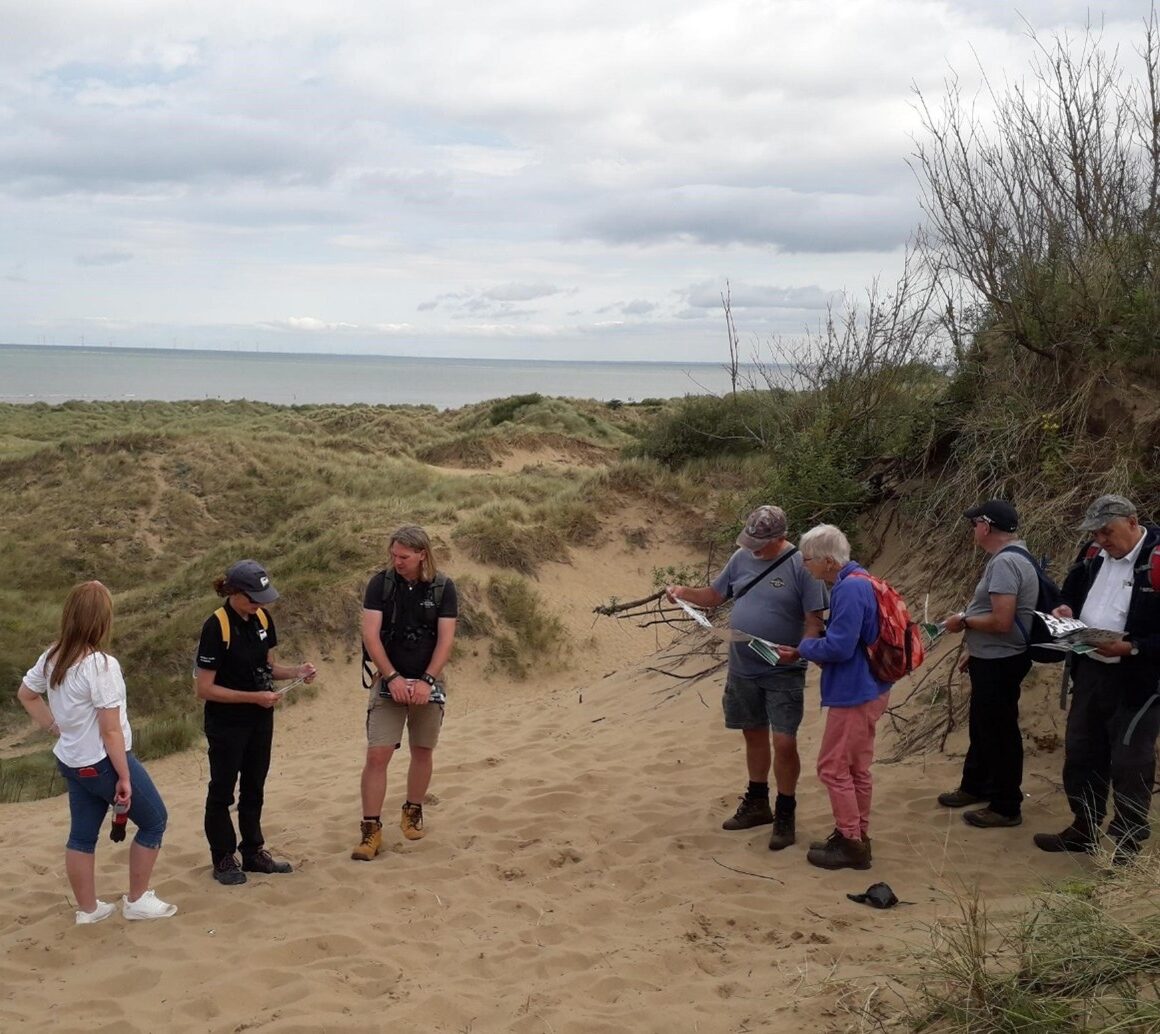
On Friday the 2nd of August Our Dee Estuary spent a gorgeously sunny afternoon exploring Talacre dunes with partners from the Butterfly Conservation Society (BCS) and ENI Conservation team as well as an enthusiastic group of volunteers. We began the day with a walk through the dunes under the expert guidance of our partners, identifying species as we went along and getting an eye in for butterfly spotting.
We then filtered into groups and identified as many species and individuals across site as we could. Most common on the day were the gatekeeper with its vibrant orange colouring on the wing and the wall with a more subdued colour scheme. We also saw a large number of meadow brown, small skipper and common blue. We had single sightings of both small heath and speckled wood. But excitement here was not matched by any other than the three grayling observed sunning themselves on the paths. These are our largest brown butterfly and very characteristic of coastal dune systems, having suffered an 80% decline in recent years it is great to see them hanging on in Talacre.
All data collected on the day will be reported to the Butterfly Conservation Society and forms part of a national data set put together each year during the big butterfly count. This count enables BCS to keep track of how species are faring across the UK and target conservation efforts. This takes place annually for around 3 weeks during summer and anyone can take part.
Free resources can be found on their website here: Big Butterfly Count 2024 | Butterfly Conservation (butterfly-conservation.org)

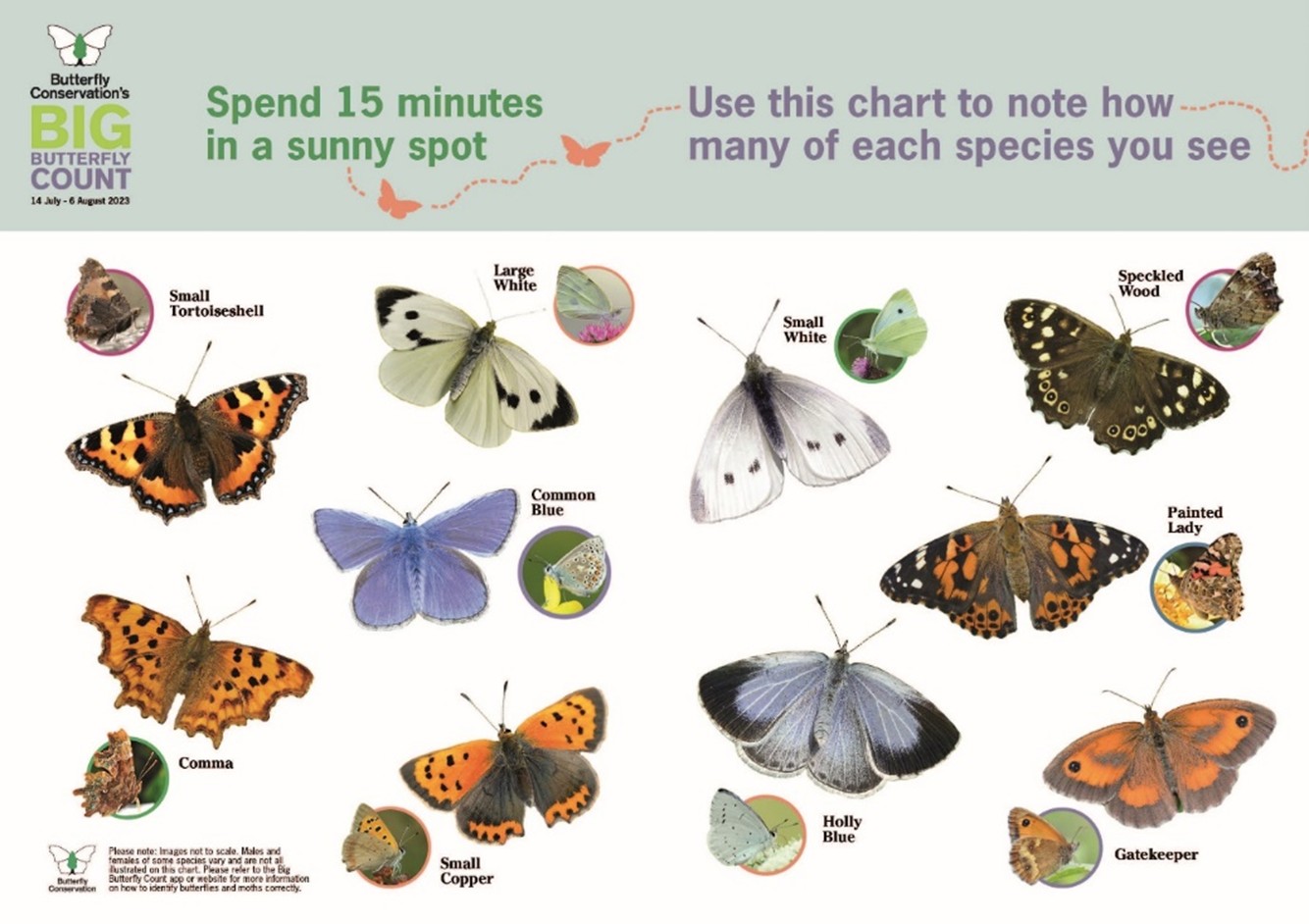
Photo Credits: Our Dee Estuary.


