July 2024 News

A Day Out on Our Dee Estuary
On Wednesday the Our Dee Estuary team took a group of staff from our host partner, Cheshire Wildlife Trust, for a guided walk out to Hilbre Island, followed by a tour of the Cheshire Wildlife Trust’s Red Rocks Nature Reserve in Hoylake.
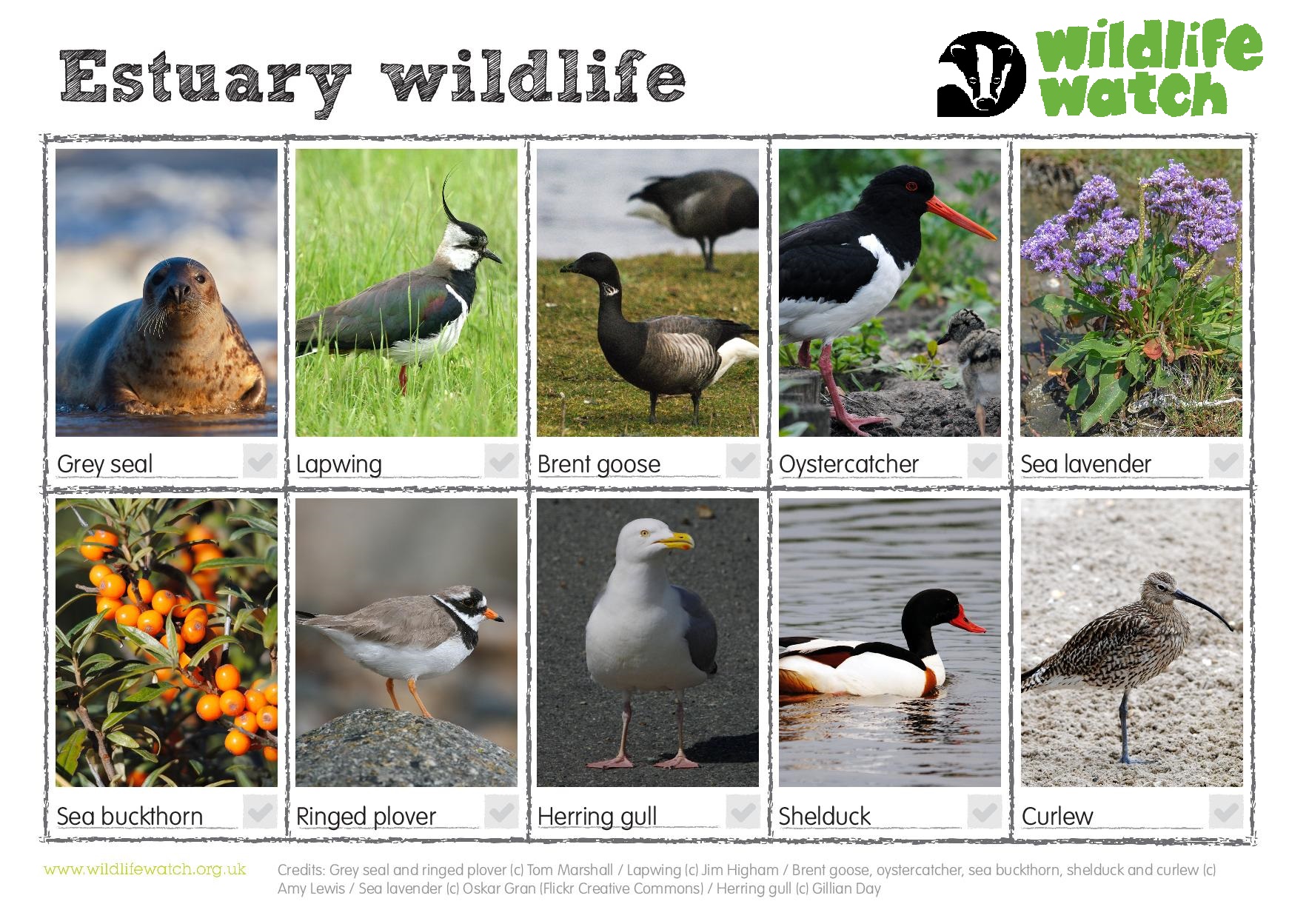
Here is a list of some of the wildlife we saw across the two sites: seals, turnstones, crabs, eiders, oystercatchers, kittiwakes, kestrel, peregrine hunting a meadow pipit, emperor dragonfly, leeches, Ramshorn snails, orchids, sea holly, skylarks, and sandwich terns, just to name a few.
Have you been to Hilbre Island yet?
The Our Dee Estuary Team
Spotlight on Shoresearch
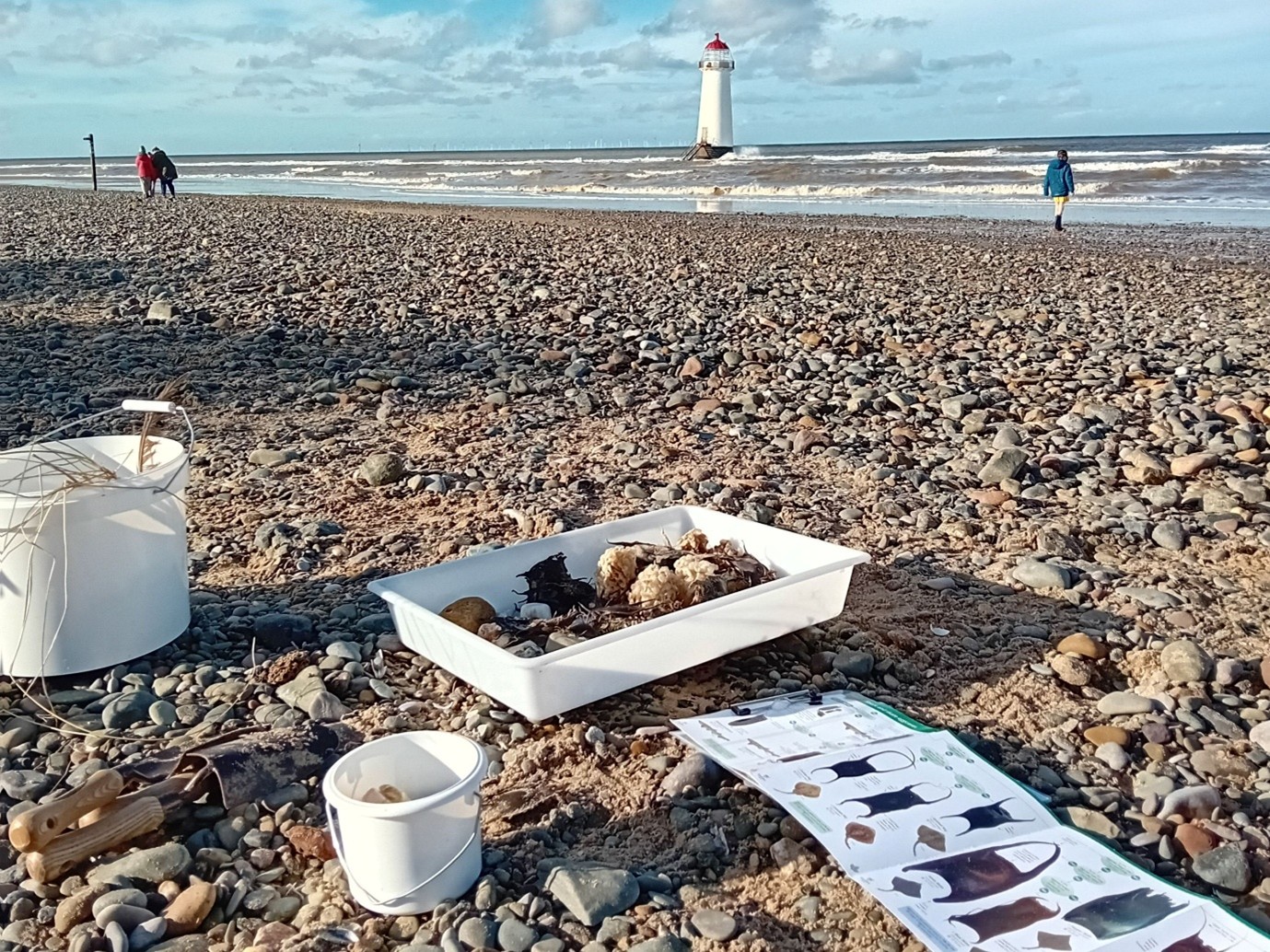
Our assistant Carys has been running Shoresearch events for us every school holidays and has found so many interesting species on the strandline.
Taking a walk on the beach and exploring what has been washed in by the tide is something that we can all do even if it is a bit grey outside.
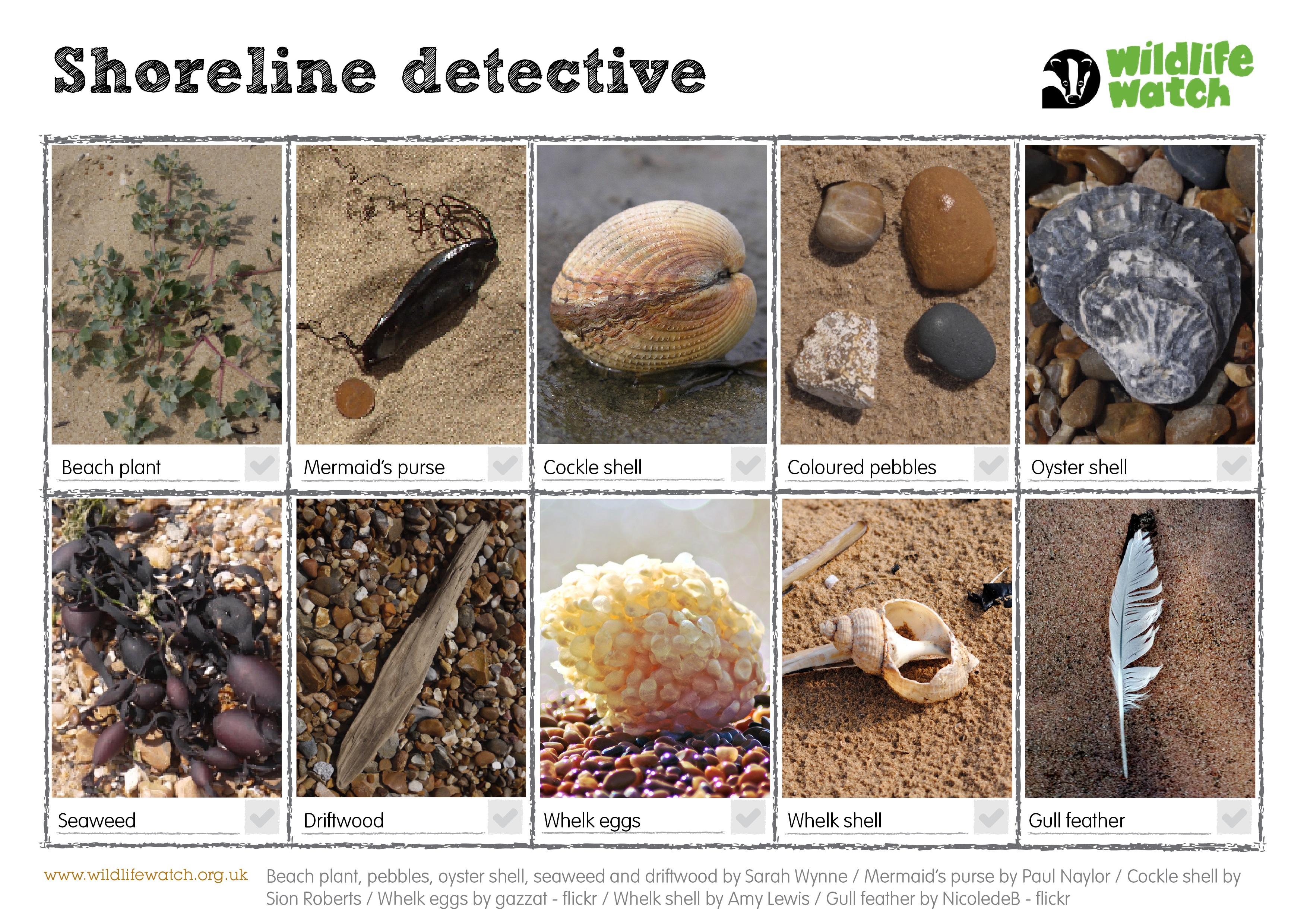
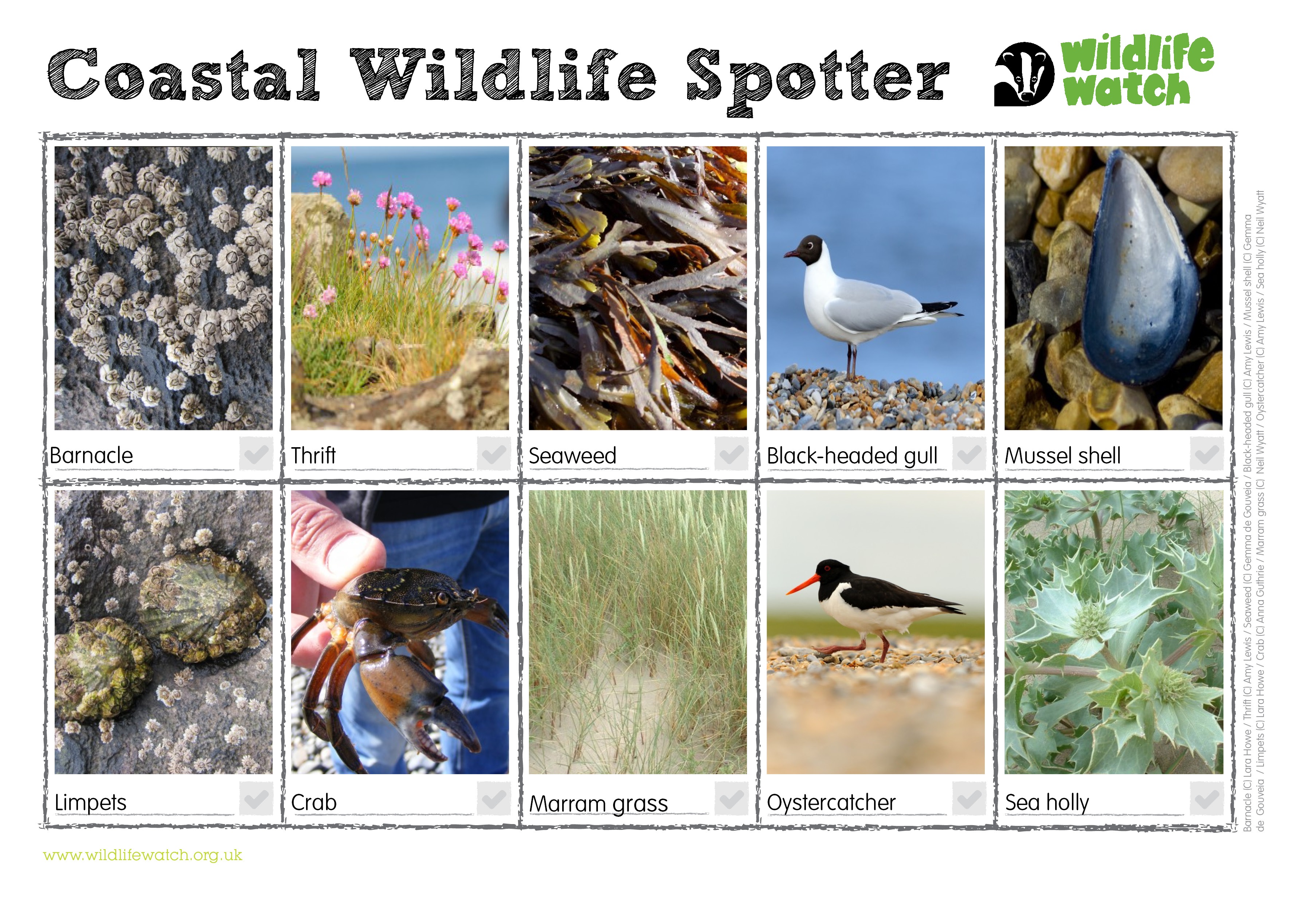
There are plenty of helpful guides out there for you such as The Wildlife Trust spotter guides for the shoreline, the estuary and coastal wildlife which can be easily downloaded and printed or saved to your smartphone.
Here are just a few species for you to learn about.
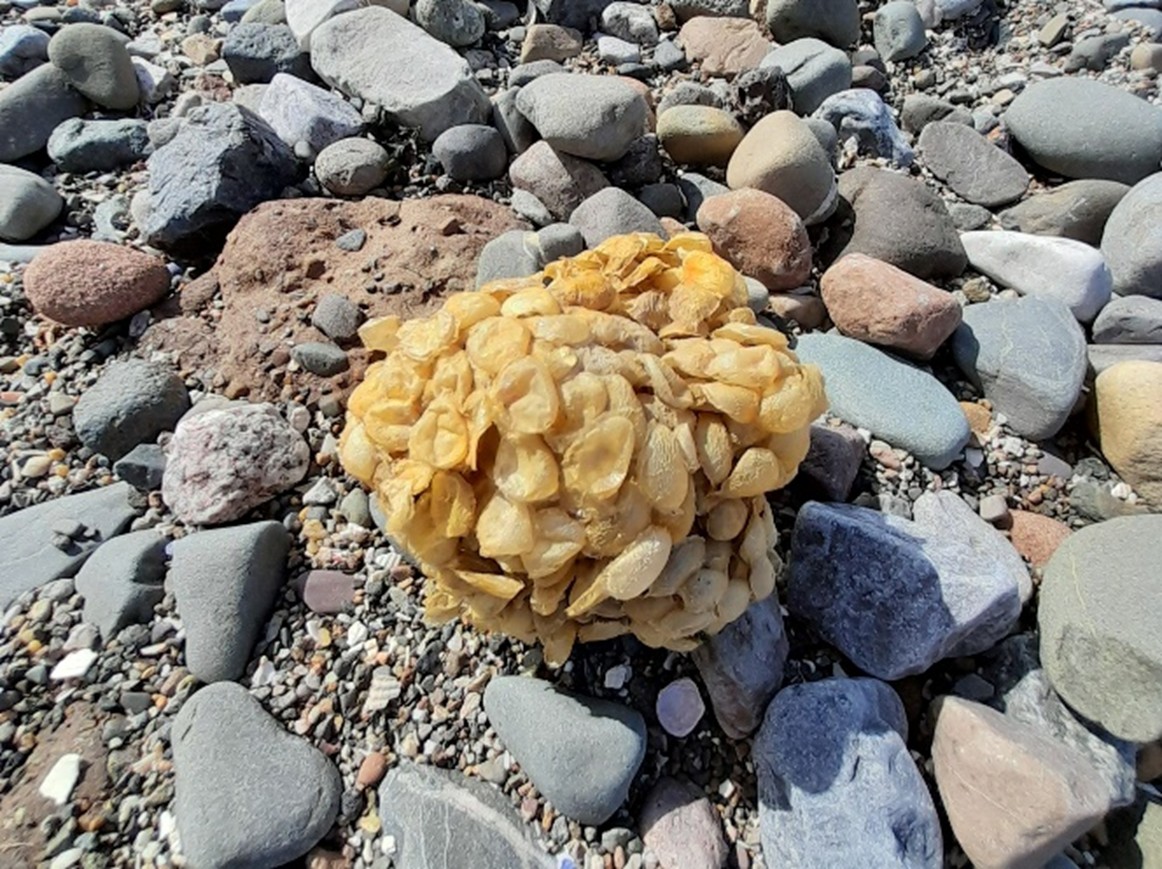
Common whelk (egg cases)
Common whelks are large marine snails, the largest in the UK, and they live on sandy seabed. They lay up to 2000 eggs in a large spongey ball.
On our coastline we often see these large spongey balls which are actually empty common whelk egg capsules washed up in the strandline.
Did you know? Common whelks are cannibalistic and the first whelks to hatch will consume their siblings!

Thornback ray (egg cases)
Mermaid’s purses are a strong favourite amongst our Shoresearchers!
Empty Thornback ray egg cases are a common find along the Dee Estuary. They have a capsule length of around 7 cm and are dark in colour with well formed keels and horns.
Thornback rays can lay up to 150 egg cases a year. This egg case is where the embryo Thornback ray will develop. It spends around 4-6 months developing in the cases after which a perfectly formed but tiny ray will emerge from the case. Most thornback rays eventually reach about a metre across.
Top tip: If you’re wanting to identify your egg cases, take them home and soak them in some water, it’ll allow you to see details in colouring much better.

Bladder wrack
Bladder wrack is a common find on the UK coastline. It’s an olive-brown seaweed and can be easily recognised by its branching fronds that have air filled sacks or bladders on them – a bit like bubble wrap.
Did you know? the air bladders allow the seaweed to float upright underwater, this helps them exchange gases and absorb nutrients when in the water.

Peppery Furrow Shell
The peppery furrow shell is a bivalve shell and part of the mussel family.
They can grow up to around 6 cm in length. It can burrow to around 20 cm deep in thick mud or sand.
The external part of the shell is normally white, yellow, or grey and sculpted with fine concentric lines.

Common periwinkle
This is Britain’s largest periwinkle with the shell height standing at around 5 cm.
It is a small and edible marine snail and can be often known as the edible periwinkle.
The shell is smooth, and the colour can range from light grey, brown or reddish through to black but it is normally dark grey or black in colour with bands across the shell. The centre of the shell is normally white.
Did you know? These periwinkles can be boiled and then pulled out of their shells with a cocktail stick. Add pepper for flavour.

Common mussel
The common mussel is found on almost every UK shore. It’s a firm favourite with people, sea birds and all kinds of marine creatures like starfish, crabs, and Dog whelks.
Mussels form large dense mussel beds on the seafloor by using sticky fibres to attach themselves to substrates. They are filter feeders meaning they filter their food of plankton and detritus out of the water.
The blue colouring on the shell makes it an attractive shell to collect when empty, however they can sometimes be more purple or brown in colour.
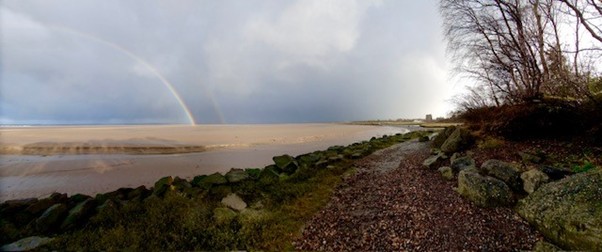
Summer! What summer?
With summer being a bit of a flop so far it can seem rather pointless visiting the seaside if the sun isn’t shining however there is plenty of research out there to show that just being by the water can make us feel better. Our assistant Carys has been looking into the positive effects of blue spaces on our mental and physical wellbeing.
Living near, recreating in, and feeling psychologically connected to the natural world and our blue spaces are all associated with better mental health.
Studies have shown that coastal neighbourhoods report higher positive wellbeing than urban neighbourhoods. Those who live closer to blue spaces have statistically higher physical activity levels, higher levels of vitamin D and better social interactions. Even simply a sea view can benefit our wellbeing. Another study which collected over a million responses, showed that people were by far the happiest when in blue spaces.
Water has psychological healing effects. Spending time in watery environments or blue spaces has been shown to lead to significant benefits in reducing negative moods and stress. Some researchers have even stated the coast to be the most socially levelling environment – an environment where high and low income earners can and do access and spend quality time with friends and family. Comparatively, green spaces such as forests and mountainous environments can often be viewed as inaccessible and exclusive places.
Blue spaces allow people to have an outlook of something much bigger than themselves, it is an environment where many people find that they can relax. The sound of water, whether that be the flow and ebb of the tides, waves, or a river rushing, fall into a sound category known as ‘pink noise’ which is known to aid sleep and improve memory. Getting into the water itself can increase these benefits even more, as seen by the increased popularity of wild swimming and cold water swimming. Wild swimmers explain that the change in conditions can give a sense of distraction from every day thoughts and bring a sense of peace where you feel truly connected to the environment.
So what blue space are you going to visit this weekend?

Thrifty
Sea thrift may also be known as thrift, cliff clover or sea pink.
It is an evergreen plant with pink flowers that flower mainly between April and July but can flower through to October. It isn’t too picky where it lays its roots and can be found on rocky shores, cliffs, marshes and sand dunes alike. Sea thrift offers a splash of colour on a dull day and provides nectar for a range of insects.
Sea thrift is in full flower at the moment and has been a real highlight during recent trips to Hilbre Island. The next Hilbre Island Open Day is the 17th of August, but you can visit any day as long as the tides allow you to visit safely and you follow the designated route from West Kirby to Little Eye, across to Middle Eye and onto Hilbre. You can find out more on The Friends of Hilbre Island Facebook group.
Did you know? Thrift as a noun means to save money and spend it carefully. Thrift was used as an emblem on the threepenny between 1937 and 1953 – a clever and light-hearted pun at a time in our British history when saving, making, mending and general ‘thrift’ were a part of everyday life.
Photo Credits: Cheshire Wildlife Trust, Our Dee Estuary, Alan Price, Alexander Mustard/2020VISION, Julie Hatcher, Melissa Roberts, Paul Steele – Bald Hiker.