
June 2024 News

Let’s celebrate World Sand Dune Day!
In this month’s newsletter we are celebrating the 4th annual World Sand Dune Day, launched by Cyfoeth Naturiol Cymru | Natural Resources Wales in 2021. Sand dunes are a special and increasingly rare habitat here in the UK but we are lucky to have 3 sites here on the Dee Estuary where you can explore sand dunes and the wildlife they support. On the Wirral is Red Rocks Nature Reserve which has established sand dunes and on the Welsh side of the estuary are Gronant and Talacre sand dunes.
The Welsh sites are the focus of this newsletter as we have a guest contributor, Neil Smith from Cyfoeth Naturiol Cymru | Natural Resources Wales, who has written a piece for us about the important work that is going on to protect these habitats in Wales.
Red Rocks Nature Reserve, owned by the Royal Liverpool Golf Club and managed by Cheshire Wildlife Trust is also being protected and maintained and is accreting, meaning the sand dunes are growing and developing rather than being eroded or washed away by the sea.
We hope you enjoy learning about sand dunes and the plants and animals that call them home.
The Our Dee Estuary Team
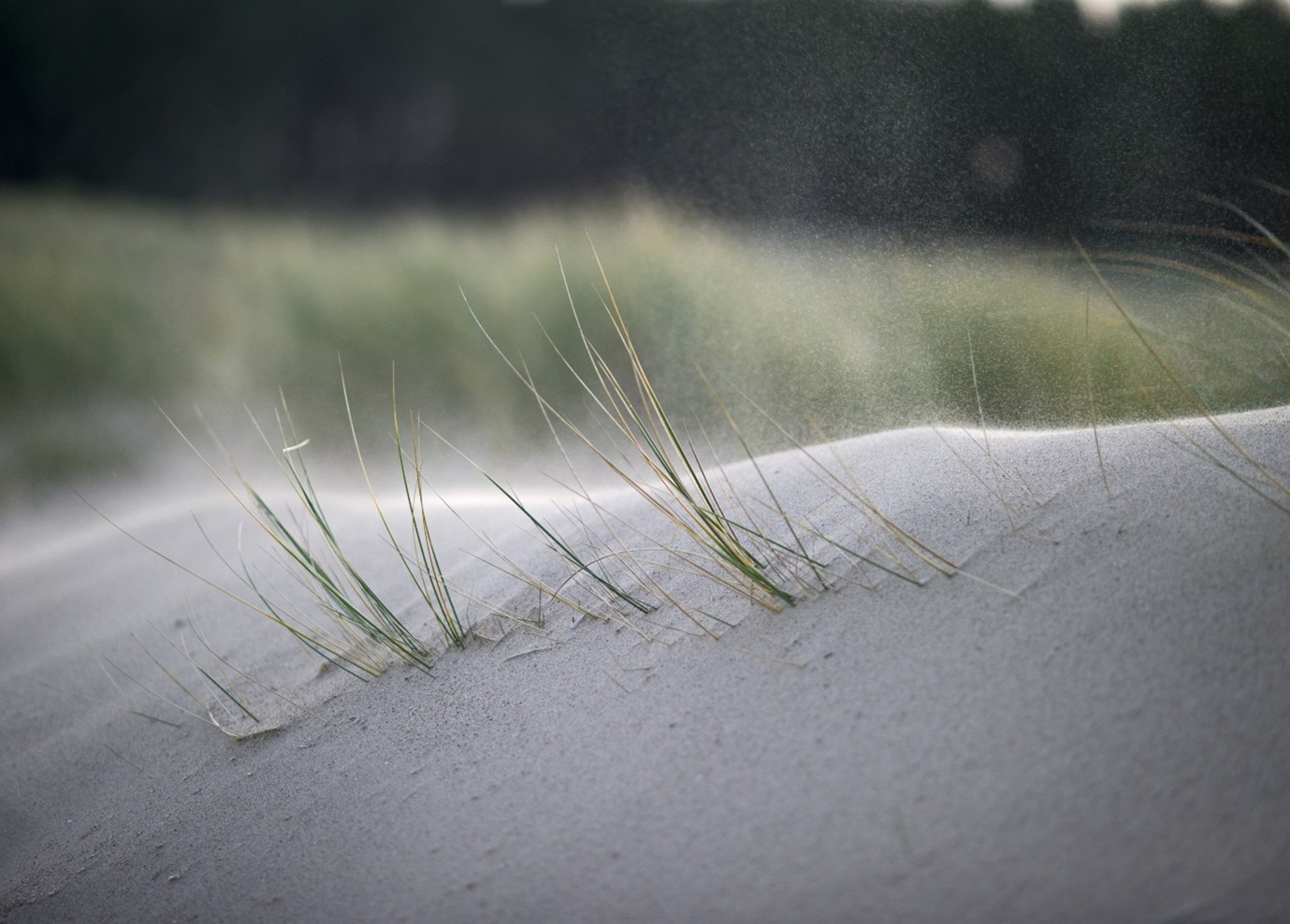
Rejuvenating the dunes at Gronant and Talacre
Neil Smith from Cyfoeth Naturiol Cymru | Natural Resources Wales tell us about their work with sand dunes on the Dee Estuary
On Saturday 29 June people around the globe will celebrate World Sand Dune Day and seize the opportunity to highlight the importance of protecting and enhancing these vital coastal habitats.
This will be the fourth annual celebration which was established in 2021 by the Sands of LIFE and Dynamic Dunescapes projects.
Here Neil Smith, NRW Conservation Advisor, talks us through the importance of sand dune habitats and our work to restore them at Gronant and Talacre.
Sand dunes are often overlooked habitats, but they are home to a range of rare flora and fauna, such as little terns, orchids, natterjack toads, as well as a cacophony of invertebrates such as butterflies, moths and mining bees, many of which are classified as threatened or vulnerable.
World Sand Dune Day aims to highlight these unique landscapes, which straddle land and sea, and are some of the best locations for wildlife in Wales, as well as being great places to relax, unwind, and reconnect with nature.
Gronant Dunes and Talacre Warren Site of Special Scientific Interest (SSSI) is located between Prestatyn and Talacre, and is of special interest for plant life, insects and birds. The dunes at Gronant and Talacre are also part of the internationally important Dee Estuary / Aber Dyfrdwy Special Area of Conservation (SAC).
These dunes represent the only significant remnant of the once extensive North East Wales coastal dune system that ran from Rhyl to Point of Ayr, broken only by the inlet of the Prestatyn Gutter. It is also the main site in Wales which provides a home to the rare natterjack toad.
Unfortunately parts of the dunes at Gronant and Talacre have been under pressure for some time. Therefore NRW officers, in close partnership with Eni (UK) Ltd. and Presthaven Holiday Park, have recently been investing in restoration works across Gronant and Talacre, whilst we are also working with Denbighshire County Council to support the warden duties of the little tern colony.
We have led on the creation of areas of new bare sand habitat in the open glades, that will hopefully boost rare plants and invertebrates that depend on this habitat. This will also be of benefit to the natterjack toad population.
Another important bit of work to help protect the dunes is mowing. In the absence of grazing, contractors have mowed areas of the dune grassland to help keep the vegetation short that will allow orchids to flourish.
We’ve also been working to remove invasive species from the sand dunes to restore their natural biodiversity. Clematis, and to a lesser extent sea buckthorn and Rosa regosa, started to spread widely across the site. These are part of an on-going programme to reduce their impact on our native species.
Plans were recently put in place to restore two areas of dune slack on the Warren and continue control of invasive species to enhance the condition of this fine and internationally important sand dune system.
Elsewhere the Our Dee Estuary project is working to raise awareness of the sand dune and other important habitats and wildlife of the Dee Estuary. The Tidal Dee Catchment Partnership project is designed to inspire coastal communities on the Wirral and in Flintshire & Denbighshire about the natural heritage of the Dee Estuary, and is supported by The National Lottery Heritage Fund.
You can find Welsh sand dune education resources at Natural Resources Wales / Sand dunes
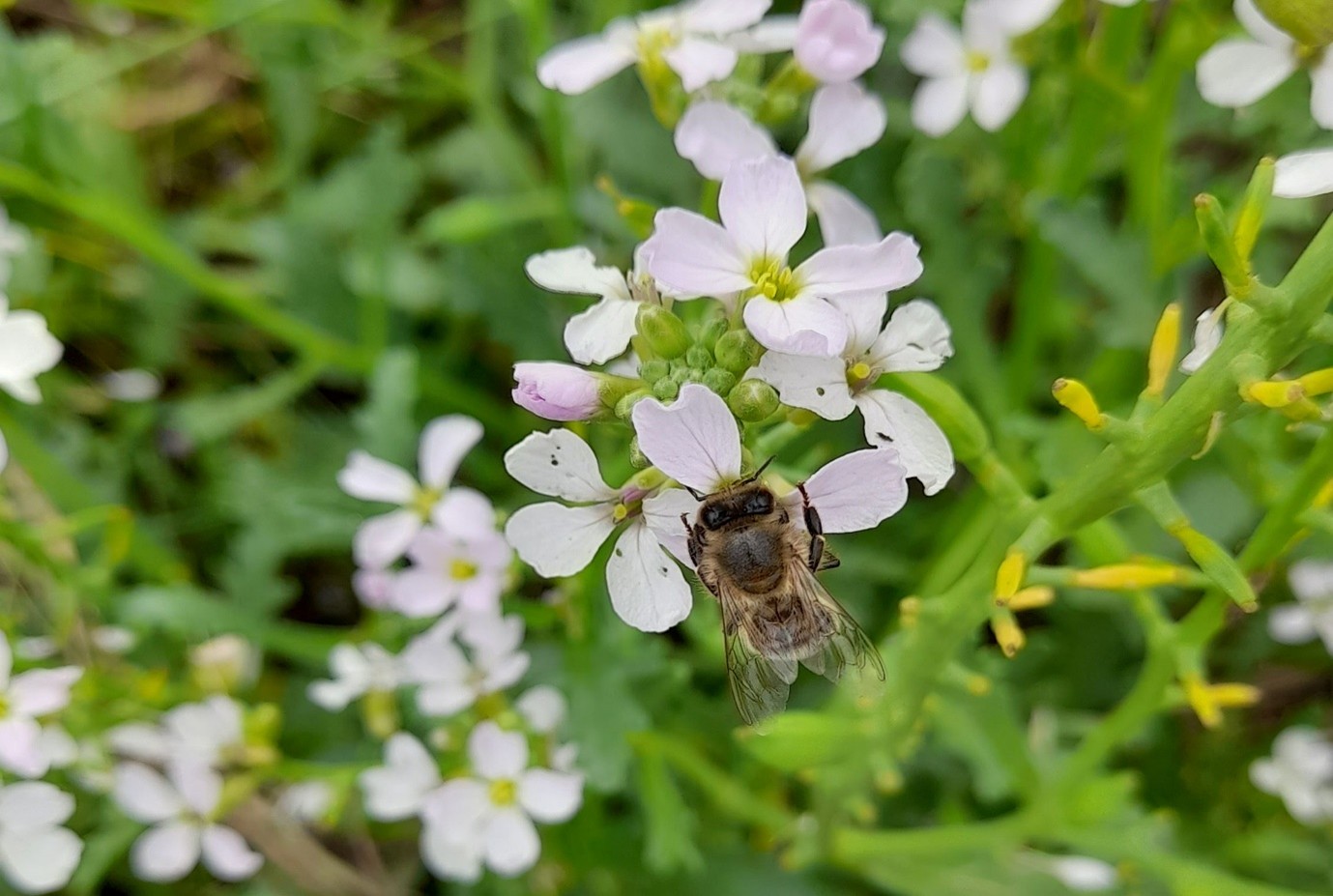
Coastal Flora
The Welsh and English coastline supports a multitude of coastal plants across a range of habitats from salt marshes and sand dunes to rocky cliffs. Some plants are common and some much rarer.
Our sand dunes along the Dee Estuary at Red Rocks and Talacre support pioneer plant species (plants that are first to colonise an area) such as common glasswort as well as specialised plants such as sea holly.
We hope you enjoy learning about some of the coastal specialist plants we have here along our Dee Estuary.
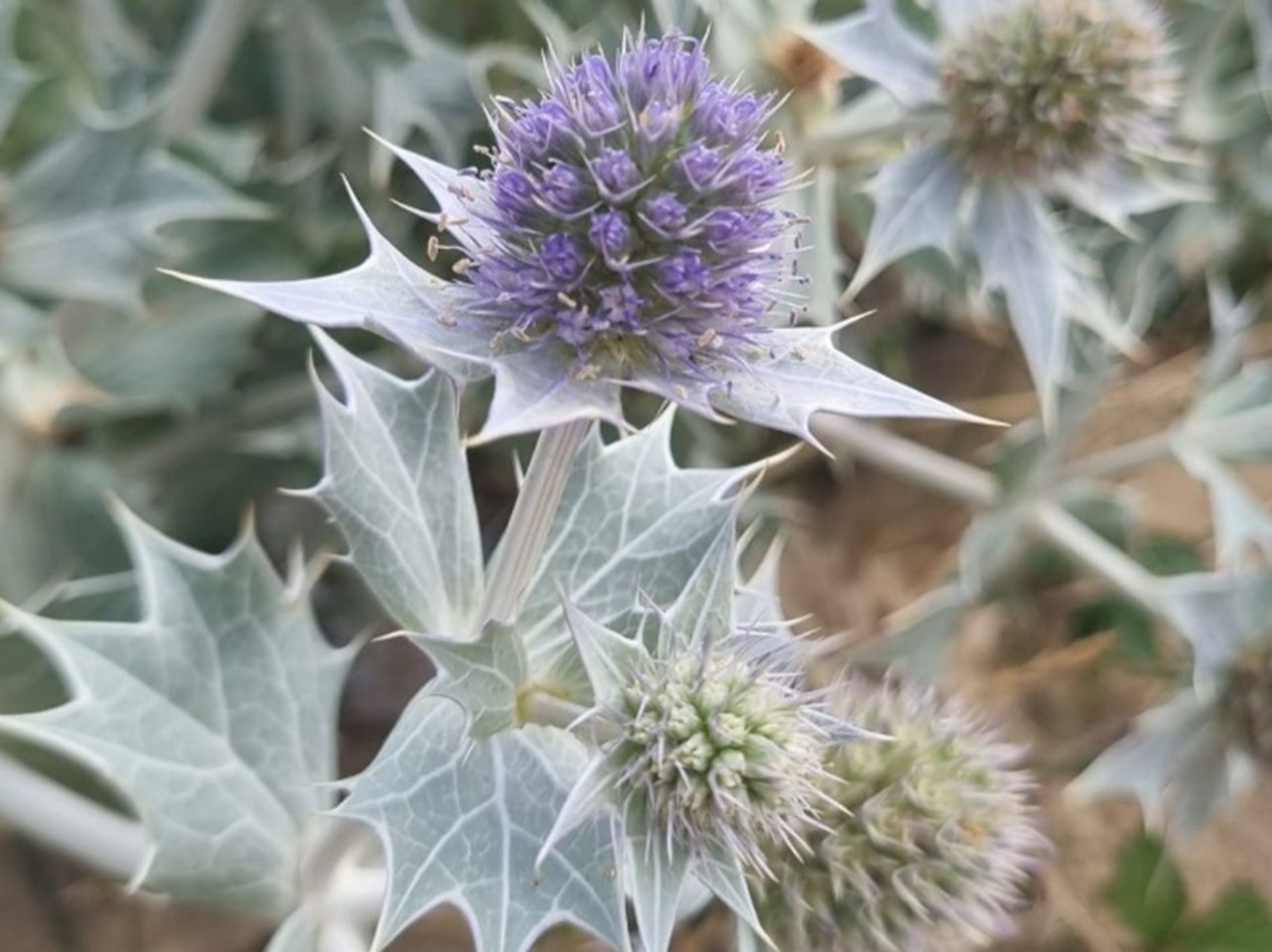
Sea Holly
Despite a similar name to the Christmas favourite, sea holly is a close relation to the carrot family with a fleshy tap like root to store water in dry conditions.
The sea holly blooms a blue flower between July and September which proves popular amongst butterflies. Its grey to green, spikey leaves have a waxy coating which also helps keep water inside the leaves in the dry conditions it grows in.
Did you know? Sea holly is the county plant of Merseyside.

Common Glasswort
Common glasswort grows on saltmarshes and sandy mud flats – the Dee Estuary making the perfect home for this pioneer species. This plant is an important precursor to more stable salt marsh vegetation.
Common glasswort, or marsh samphire as it is sometimes known, belongs to the genus Salicornia. These are succulent, annual, halophytic plants which means they can thrive in salty conditions like salt marshes.
This plant is edible and goes well with fish dishes. If you are foraging, remember it’s an offence to totally uproot a wild plant. Also, don’t eat anything you can’t identify!
Did you know? The ashes of glasswort plants used to be used to make soaps and glass.

Marram Grass
Tussocky, spiky, coarse grass that thrives in shifting sands. It has long root systems and can survive sand build up by growing out above the sand.
The long roots also help to stabilise the sand dunes helping to form embryo dunes and semi-fixed dune habitats. Marram grass is a specially adapted species to survive the difficult and arid conditions of dunes.
Maram grass is the dominant grass in most our local dune systems.

Sea Milkwort
A leafy, green plant with small pink flowers that bloom between May and September.
Sea milkwort grows in saltmarshes and sandy mud flats and is able to store a large volume of water to cope with the salty conditions. It can form thick and low lying ‘mats’ throughout saltmarshes.
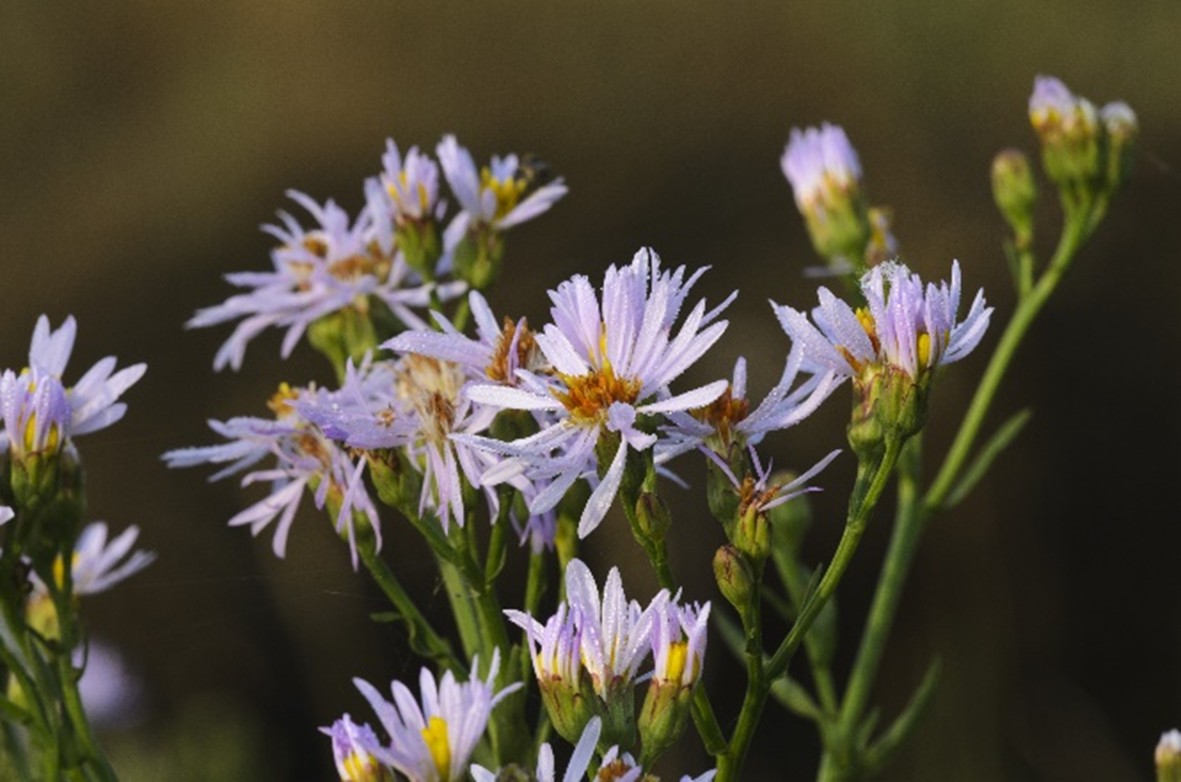
Sea Aster
This plant has a dark green, leafy stem with flowers that have pale pink/ purple petals and a yellow centre. It grows abundantly in salt marsh habitat and is seen all along the dee estuary coastline, particularly in the Wirral foreshore and accreting salt marsh areas.
The growth of sea aster helps to stabilise mud and sand which reduces coastal erosion and therefore helps to form habitats for less salt tolerant plants.
Sea aster flowers through to late autumn and therefore provides a much
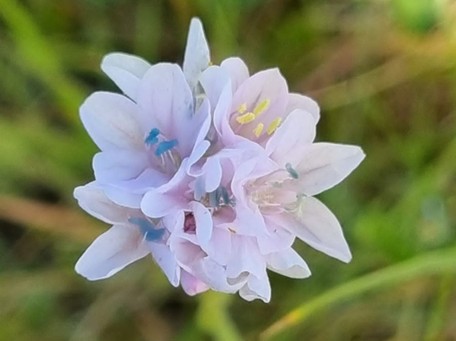
Sea Thrift
Sea thrift may also be known as thrift, cliff clover or sea pink.
It is an evergreen plant with pink flowers that flower mainly between April and July but can flower through to October. It isn’t too picky where it lays its roots and can be found on rocky shores, cliffs, marshes and sand dunes alike. Sea thrift offers a splash of colour on a dull day and provides nectar for a range of insects.
Did you know? Thrift as a noun means to save money and spend it carefully. Thrift was used as an emblem on the threepenny between 1937 and 1953 – a clever and light-hearted pun at a time in our British history when saving, making, mending and general ‘thrift’ were a part of everyday life.
Photo Credits: Our Dee Estuary, David Tipling / 2020VISION, Terry Whittaker / 2020VISION, Flint Festival.


