
The final countdown
As we welcome in 2025 the team here at Our Dee Estuary are looking to the completion of the project and, alongside partners within the Tidal Dee Catchment Partnership, beginning to plan what comes next.
A very important date for your diary is the 8th of March. That will be our day of celebration at Hoole Community Centre in Chester with a full day of activities planned! There will be more information to come in the next newsletter but please note the date in your calendar so you can come and celebrate with us all!
Activities and events will continue until the end of March so please make sure you follow us on social media and check the bottom of the newsletters for all our upcoming events as we’d love to see as many of you as possible attending and enjoying all that the estuary has to offer this winter and into spring.
The Our Dee Estuary Team.
Red Rocks Practical Conservation Work Parties
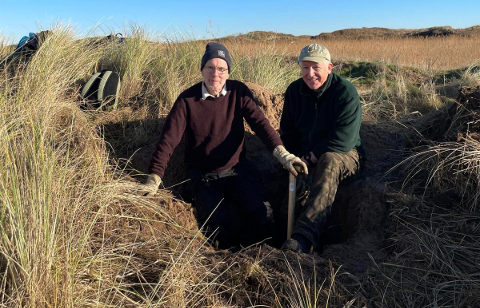
We will be undertaking some work as a volunteer team down at Red Rocks during January and February to get the reserve ready for Spring – a time where plant growth and breeding across the animals that inhabit this reserve kick off.
The sessions will involve cutting back reed, removing invasive species, clearing Natterjack toad ponds and sand patching areas of dune. These practices ensure that we can provide variation to the habitat available within the dune and reed bed systems and is ultimately highly beneficial to the wildlife that calls these areas home, as well as for the long term establishment of this habitat.
Cutting isn’t always a bad thing – the same as cutting human hair, cutting back reeds allows healthy new growth to come through. By cutting it in patches and cycles, it allows reeds of differing structures and ages to exist in the reedbed which is really important for the wildlife here.
By digging up over established vegetation on the dunes to create bare sandy areas, we are allowing loose sand to move through our sand dune systems which is important in keeping our sand dunes dynamic. Here at Red Rocks, some areas have become over stabilised with thick vegetation meaning the dunes are no longer dynamic. This means they’re not able to shift and change with the weather, erosion or growth. Bare sand is also a really important habitat for many species such as the grayling butterfly, sea holly and common lizard.

What to do on the Dee Estuary this winter
Winter is a really special time on the estuary, and we’d love to see as many people as possible getting out and exploring it.
Here are some suggestions on what to see and do:
Walk the Wales Coast Path at Flint Castle
The Dee Estuary coastline has so many amazing coastal walks and views to offer. Why not try the linear ~3 mile route that follows the Wales Coast Path from Flint Castle to Bagillt?

Burton Marsh Greenway
When the ground is getting a little too wet to walk off path, why not visit the Burton Marsh path and boardwalk route into Chester which skirts the Cheshire side of the Dee Estuary?

Red Rocks
Red rocks is a great family friendly walking location with an abundance of wildlife. The coastal reserve covers 10 acres of sand dunes, reedbeds and marsh.

Greenfield Valley Heritage Park
Greenfield Valley Heritage Park’s Visitor Centre is open every Thursday during the winter but much of the grounds are open to the public all year round.

RSPB Burton Mere Wetlands
Step into ancient woodland with towering oaks, before winding your way to the lagoons and grasslands beyond. You might see avocets, with their up-curved beaks, or egrets or harriers. Treat yourself in the café. Free for RSPB members and £6 for non-members. Find out more.

Talacre and Point of Ayr
Stand at the northernmost tip of Wales and feel on the edge of the world, among wheatears, wagtails, warblers and a lighthouse that watches over sweeping sea views. Find out more.

Photo Credits: Our Dee Estuary, David Tipling / 2020VISION, Paul Steele, Paul Jubb, Royal Liverpool Golf Course


