
September 2022
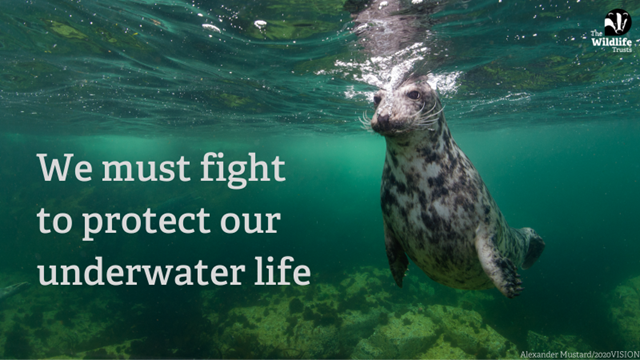
HIGHLY PROTECTED MARINE AREAS
Have you heard of HPMAs? It stands for Highly Protected Marine Areas and there is to be a new trial of these special sites in 5 locations across the UK.
HPMAs create safe havens for a wide variety of marine life, which once established, will benefit the wider marine environment. The fish and other marine life that are protected within HPMAs will gradually move into the wider area, increasing biodiversity and improving habitats such as kelp forests, seagrass beds, and mudflats, which are fantastic carbon stores.
The nearest proposed HPMA to the Dee Estuary is Allonby Bay on the Irish Sea coast.
Two of our partners, Cheshire Wildlife Trust and North Wales Wildlife Trust are part of a group of Wildlife Trusts, Living Seas North West, that share a coastline with the Irish Sea. We aim to work together in partnership to improve the coastal and marine habitat we all share.
To learn more and lend your support to The Wildlife Trust’s campaign for HPMAs visit their website.


OYSTER CATCHERS AND COCKLES
It’s autumn and time for us to welcome waders back to the estuary! Over the autumn and winter the population of wading birds on the Dee Estuary will reach over 130,000 individuals!
One of the most iconic waders on the estuary is the oystercatcher (Haematopus ostralegus). It is drawn to the estuary in large numbers due to the abundance of its favourite food, the common cockle (Cerastoderma edule).
The Dee Estuary is well known for its cockle beds and is a commercial cockling site with 54 license holders, harvesting a daily quota between the 1st of July and the 31st of December. Cockling is a closely monitored activity to make sure there are plenty left for the birds.
DEE ESTUARY VOLUNTARY WARDENS
September marks the start of a busy autumn/winter for the Dee Estuary Voluntary Wardens (DEVW). This committed group of volunteers are stationed at West Kirby from September to March, during every daylight hightide over 8.6m.
The wardens observe, record, and protect the thousands of wading birds which feed on the estuary. At high tide, waders roost along the shore which can lead to them being disturbed by people and dogs. The DEVW are helping to educate visitors so that people and waders can share our coastline.
If you’d like to join the DEVW contact mattthomas@wirral.gov.uk. You don’t need to be a bird expert to join, we’ll teach you everything you need to know!
ACOUSTIC VOLUNTEER TRAINING WITH HYDROPHONES
On the 10th of July we hosted the third of our sound recording volunteer sessions and this time we went to Red Rocks Nature Reserve on the Wirral to experiment with hydrophones. These are a special type of microphone that can be used in and around water.
It was great fun and we learned many new skills. The group will be meeting again in September to share what they have recording during the summer break.

Photo Credits: Emily Lake, Charley Dutton.


